
Sunlight is the source of energy, but intense heat is the primary enemy of electrical efficiency. In extreme climates, a standard solar panel will degrade rapidly, losing both its power output and its financial value within years. At Afrikas.tech, we engineer our infrastructure for true Thermal Resilience.
The Physics of Heat and Voltage Drop
All photovoltaic cells have a “Temperature Coefficient.” As the silicon cells heat up, the electrons become more “agitated,” which creates resistance and causes the voltage to drop significantly. A standard panel rated at 550W might only produce 460W when the surface temperature hits 65°C.
Building for Thermal Resilience
Our engineering approach focuses on heat dissipation and material science:
- Half-Cut Cell Technology: By cutting the cells in half, we reduce the electrical current traveling through each busbar. This lowers the internal resistance and reduces the “hot spot” temperature of the panel by several degrees.
- Passive Air-Flow Geometry: We design our industrial mounts with a 150mm “Ventilation Gap.” This creates a natural “Chimney Effect,” where hot air is sucked out from behind the panels and replaced by cooler air from the ground, maintaining a cell temperature up to 12°C lower than roof-flush mounts.
Material Integrity in Harsh Environments
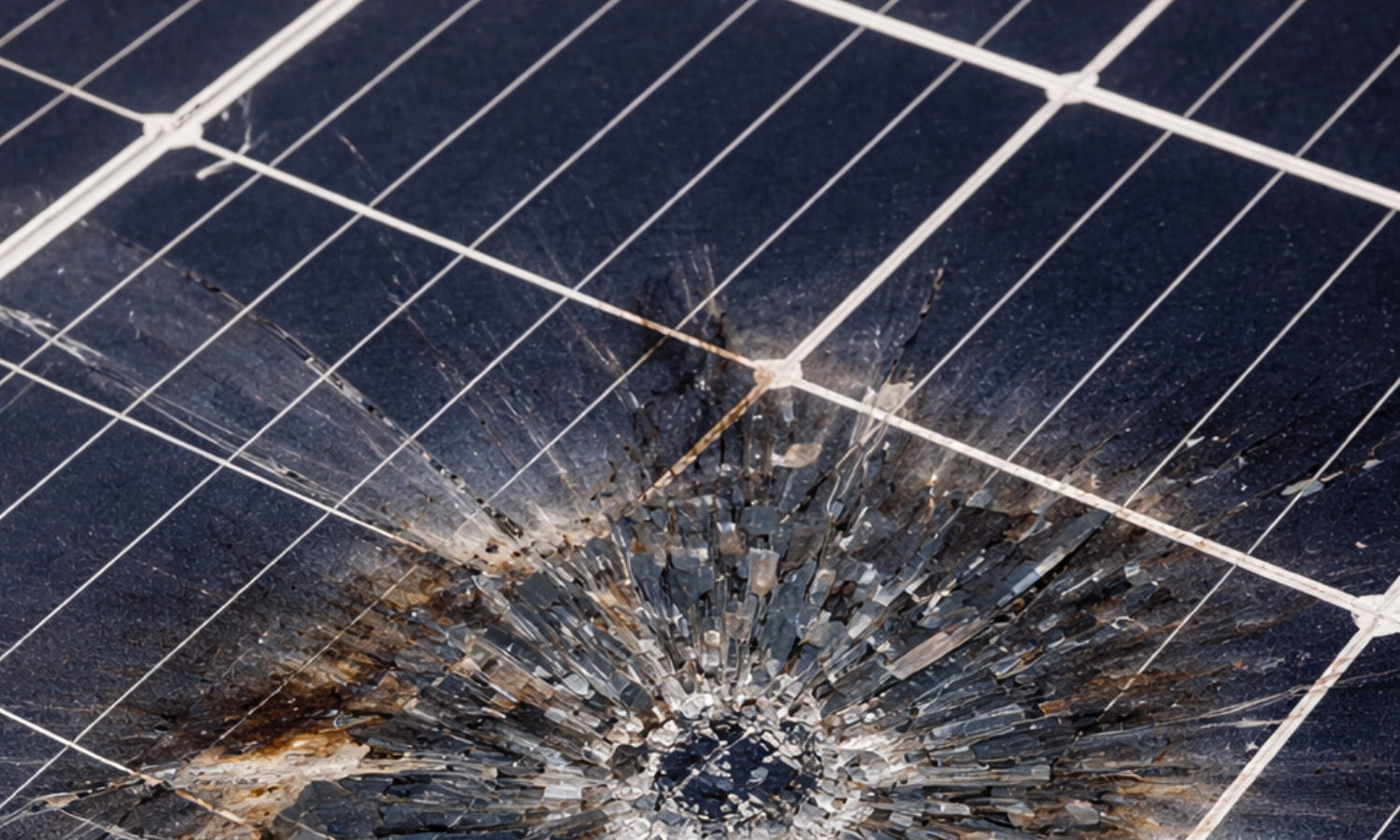
Beyond efficiency, we address structural decay. Extreme UV radiation and the expansion-contraction cycles of desert environments cause “delamination” in cheap panels. We use double-tempered glass and UV-stabilized backsheets to ensure that the panel remains hermetically sealed for 25+ years, protecting your energy investment against the harshest elements on earth.