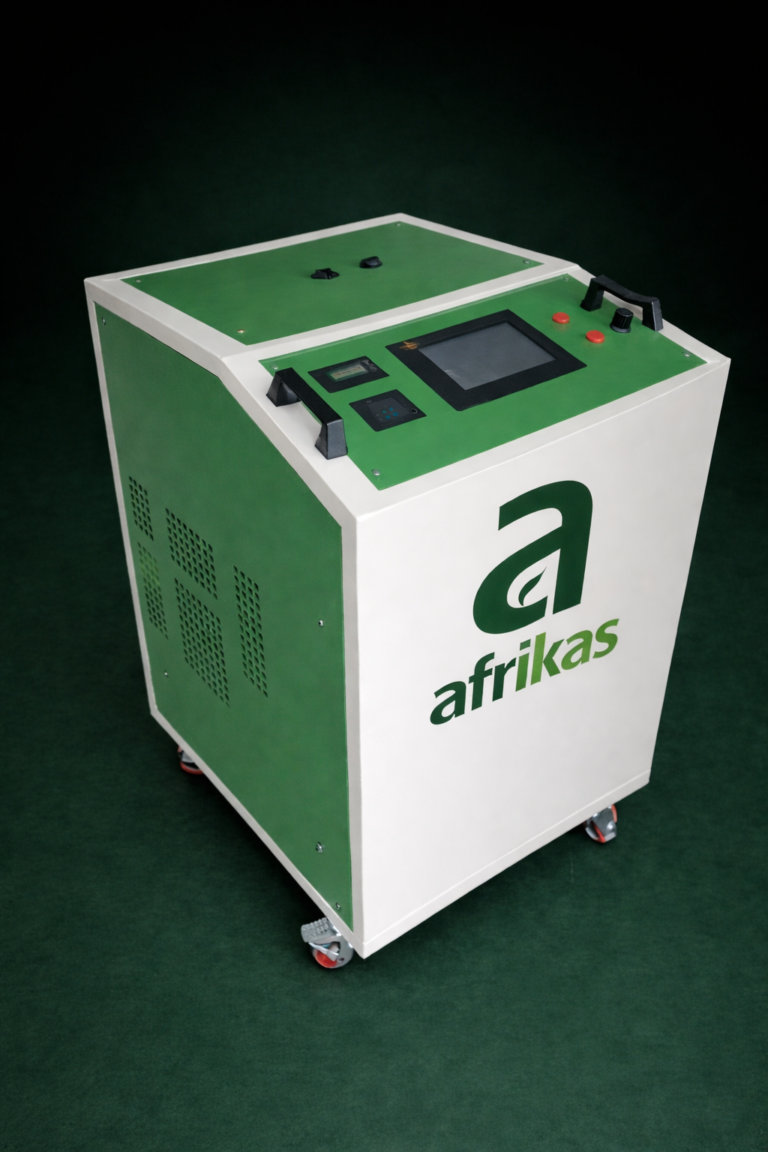

As HHO technology becomes a standard for engine optimization, many operators ask about the risks of hydrogen. Here is how we engineer our HHO systems to be the safest, most stable component in your engine bay.
Myth vs. Engineering: Zero-Storage Architecture
The biggest misconception about HHO is that it involves carrying a pressurized hydrogen tank. This is incorrect. Our systems utilize On-Demand Generation.
- Immediate Consumption: The hydrogen is generated through electrolysis only while the engine is running and the alternator is producing current. The gas travels directly from the generator to the air intake—there is never more than 0.5 liters of gas in the system at any time.
- Automatic Shutdown: The moment the engine stops, the electrolysis process ceases. There is no residual pressure and no flammable gas stored on the vehicle when it is parked.
Multi-Stage Safety Protocols
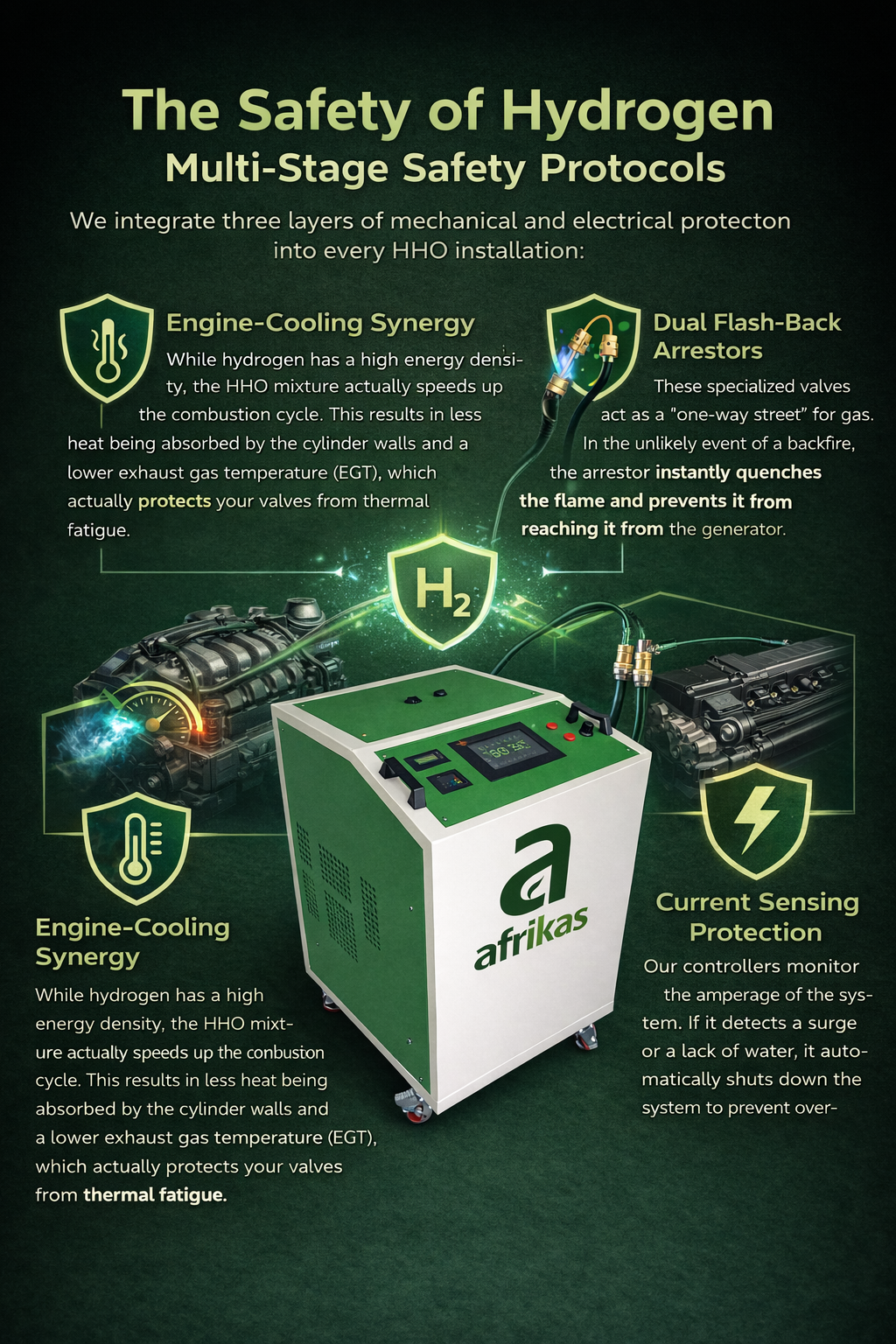
We integrate three layers of mechanical and electrical protection into every HHO installation:
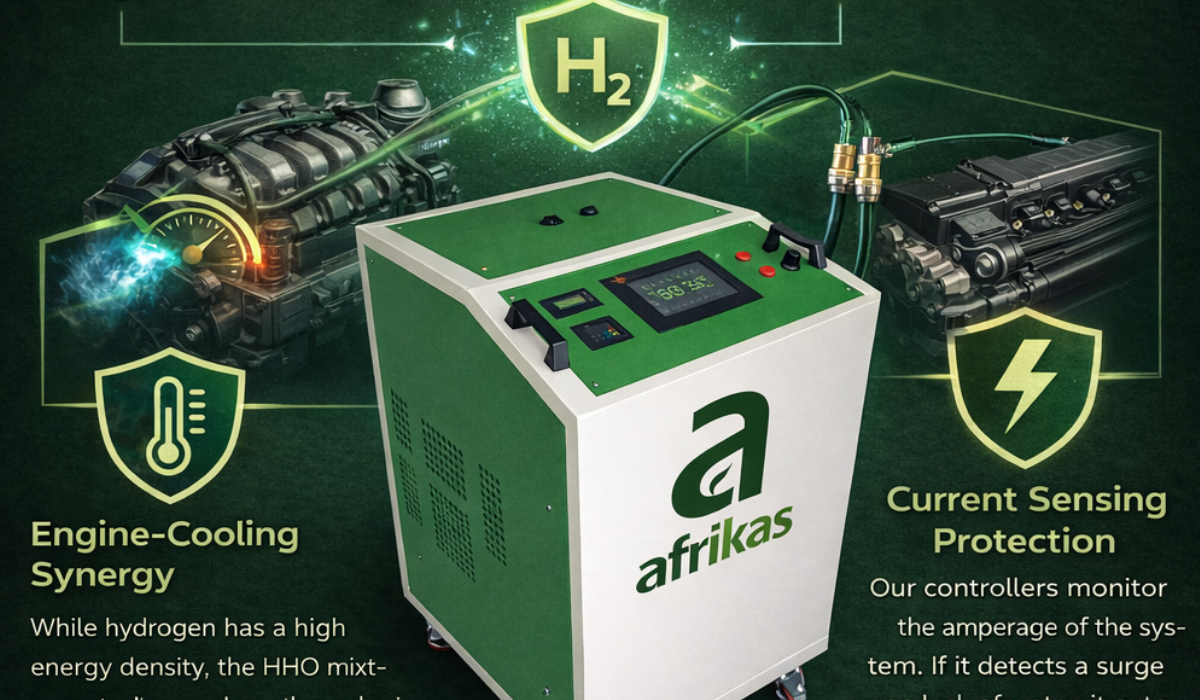
Engine-Cooling Synergy: While hydrogen has a high energy density, the HHO mixture actually speeds up the combustion cycle. This results in less heat being absorbed by the cylinder walls and a lower exhaust gas temperature (EGT), which actually protects your valves from thermal fatigue.
Dual Flash-Back Arrestors: These specialized valves act as a “one-way street” for gas. In the unlikely event of a backfire, the arrestor instantly quenches the flame and prevents it from reaching the generator.
Current Sensing Protection: Our controllers monitor the amperage of the system. If it detects a surge or a lack of water, it automatically shuts down the system to prevent overheating.